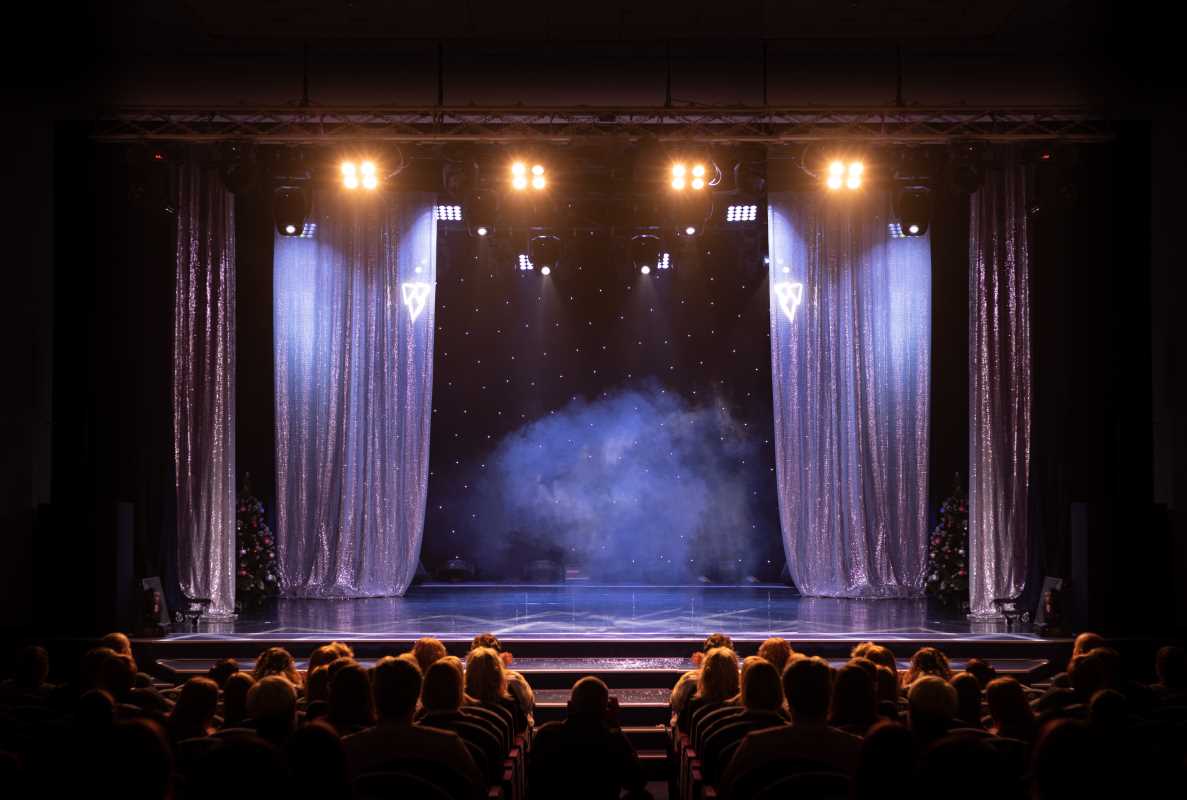
The theatre world has always been a place of suspension of disbelief, where painted flats become castles and a spotlight becomes the moon. But recently, the curtain has risen on a new co-star: Artificial Intelligence. We aren't just talking about a robot rolling onto stage to deliver a monologue in a monotone voice; we are talking about fully immersive, generative experiences where the script is written in real-time, the sets evolve based on audience reaction, and the line between actor and algorithm is delightfully blurred. This is the new frontier of performance art, where code meets creativity to produce spectacles that are never the same twice. It is a chaotic, beautiful, and slightly unnerving evolution of storytelling that demands you stop being a spectator and start being a participant.
However, finding these gems requires a bit of digging. Since the technology is bleeding-edge, these productions often pop up as limited runs or experimental installations before vanishing into the digital ether. But there are certain cities and venues that have established themselves as the crucibles for this new art form. These are the places investing in the hardware, the software, and the brave creative souls willing to let an algorithm take the wheel. They are the testing grounds for the next century of storytelling.
Before you book your tickets to the digital unknown, it is helpful to know what you are signing up for. This isn't passive entertainment. You need to be ready to engage, to move, and potentially to argue with a hologram. The following destinations represent the absolute vanguard of this movement, offering experiences that range from the deeply cerebral to the terrifyingly visceral. Pack your bags and check your skepticism at the door, because the ghost in the machine is ready for its close-up.
The Cybernetic Cabarets Of London
London has long been the beating heart of traditional theatre, but beneath the historic veneer of the West End, a digital underground is thriving. The city's immersive theatre scene, pioneered by companies like Punchdrunk, has evolved to embrace generative AI with open arms. In the gritty, repurposed industrial spaces of East London, specifically around Shoreditch and Hackney, you will find venues that are rewriting the rules of engagement. Here, the fog is likely generated by a particle simulation, and the cabaret singer might be a deepfake projection responding to the mood of the room in real-time.
This isn't just technology for technology's sake; it's about deepening the emotional resonance. By using AI to track audience engagement, these productions can pace themselves perfectly. If the room feels bored, the AI ramps up the conflict. If the audience is overwhelmed, it dials back the intensity. It’s a level of responsiveness that traditional theatre can only dream of. The result is a show that feels alive, a beast that breathes in sync with the people watching it.
London’s advantage lies in its deep pool of acting talent. The performers here are classically trained but willing to jump into the digital void. They bring a human weight to the AI-generated chaos, grounding the experience in genuine emotion. It’s this fusion of Shakespearean discipline and Silicon Valley tech that makes the London scene so unique. You get the gravitas of legitimate drama mixed with the thrill of a video game, all happening in a room that smells like stale beer and ozone.
Tokyo Digital Art District
If London is the gritty experimental lab, Tokyo is the polished, high-definition showroom of the future. The Japanese capital has seamlessly integrated technology into daily life, so it is no surprise that its theatre scene is lightyears ahead. In districts like Odaiba and Shibuya, digital art collectives have created massive, permanent installations that blur the line between museum, theatre, and virtual reality. These are not small black-box productions; these are cathedral-sized spaces where the entire environment is a projection-mapped canvas controlled by sophisticated AI.
The Tokyo scene also embraces the "idol" culture in a fascinating way, featuring virtual pop stars and anime characters brought to life on stage. These aren't pre-recorded holograms; they are AI entities that can banter with the crowd, take song requests, and even make mistakes, which makes them feel paradoxically more human. It challenges the very definition of a celebrity and a performer. Watching a stadium full of people cheer for a singer who exists only as code is a surreal, theatrical experience that you can only truly understand by being there.
Ultimately, Tokyo offers a vision of immersive theatre that is optimistic and boundless. It suggests that AI won't replace human creativity but will expand the canvas upon which we can dream. The scale, the precision, and the sheer beauty of these digital worlds make Tokyo a mandatory pilgrimage for anyone interested in the intersection of art and algorithm. It is a place where you can step inside a dream and find that the computer is dreaming right along with you.
The Warehouse District Of Berlin
Berlin has a reputation for being cool, dark, and a little bit dangerous, and its AI theatre scene fits that vibe perfectly. In the sprawling, graffiti-covered industrial parks of Friedrichshain and Kreuzberg, artists are using AI to explore the darker side of the human condition. These are not family-friendly light shows; these are intense, psychological thrillers that use technology to mess with your head. The venues are often stark, concrete caverns where the AI controls the shadows, creating a sense of dread and anticipation that is visceral.
The Berlin aesthetic is "glitch art" come to life. The AI is often programmed to be imperfect, to stutter, to break down, mirroring the fragility of society. You might find yourself in a performance where the narrative is generated by a neural network trained on dystopian literature. The dialogue is disjointed, poetic, and unsettling. The AI acts as an unreliable narrator, guiding you through a story that fractures and reforms as you move through the space. It is a challenging, intellectual form of theatre that forces you to piece together the meaning from the digital debris.
Despite the intensity, there is a profound sense of freedom in the Berlin scene. The lack of commercial polish allows for radical experimentation. Artists are using open-source AI tools to build experiences that would never get greenlit by a mainstream producer. It is raw, punk-rock theatre for the digital age. If you want to see what happens when you give a neural network a soldering iron and a copy of Kafka, Berlin is the place to be. It’s an experience that will leave you questioning reality, and checking your privacy settings.
New York City Off-Off-Broadway
New York City, specifically the experimental pockets of Brooklyn and downtown Manhattan, remains the global testing ground for narrative innovation. While Broadway sticks to the Lion King, the Off-Off-Broadway scene is where AI is being taught to write plays. Here, in intimate black-box theaters and converted lofts, you will find productions where the script is generated live by large language models, fed with prompts from the audience. It’s essentially improv comedy, but the partner is a supercomputer that has read the entire internet.
The charm of the New York scene is its focus on the text. While Tokyo dazzles with visuals and Berlin broods with atmosphere, New York is obsessed with the word. The AI is used to explore language, generating monologues that are bizarre, hilarious, and occasionally profound. Audiences might shout out a genre and a setting, and watch as the AI churns out a scene that the human actors must perform immediately, sight unseen. It is a high-wire act of talent, as actors struggle to make sense of the machine’s hallucinations, often with hysterical results.
New York's competitive creative energy drives these innovations forward at a breakneck pace. Tech startups often partner with theatre companies, using the stage as a beta test for new interfaces and narrative engines. This collision of commerce and art results in productions that are polished, witty, and sharply relevant. It is the best place to see how AI will change the way we tell stories, not just in the future, but right now, tonight, at 8 PM.
The Arts District Of Montreal
Montreal has quietly become a superpower in the world of multimedia entertainment, thanks in large part to heavy government investment in the arts and technology sectors. The city is home to some of the world's most advanced studios for video mapping and immersive sound, and this expertise has spilled over into the theatre scene. In the Quartier des Spectacles, the very streets become a stage for AI-driven performances. During festivals, entire building facades transform into reactive characters that converse with pedestrians.
Montreal is also a leader in "mixed reality" acrobatics. With the influence of Cirque du Soleil looming large, smaller companies are combining physical feats with digital wizardry. Imagine a trapeze artist swinging through a digital storm generated by AI, where the lightning strikes are triggered by the velocity of their body. It creates a spectacle that is physically impossible to replicate without the tech. The AI acts as a digital choreographer, ensuring the visual effects are perfectly synced with the human performance, no matter how unpredictable the live action becomes.
The immersive theatre here often spills out of the venue and into the city itself. "Pervasive gaming" experiences use mobile apps and AI chatbots to guide audiences on city-wide narratives. You might receive a phone call from a character (voiced by an AI) telling you to go to a specific street corner, where a projection will reveal the next clue. It turns the entire city of Montreal into a stage, and every passerby into a potential extra. It breaks down the fourth wall completely, making the fiction indistinguishable from the reality of the urban landscape.
What sets Montreal apart is the sheer joy of its productions. There is a sense of wonder and optimism that permeates the work. The AI is used to enchant, to surprise, and to delight. It is less about the existential dread of the machine and more about the magic it can create. For a traveler looking for an experience that is visually stunning, technically flawless, and genuinely fun, Montreal’s AI-generated theatre is the gold standard. It is a reminder that even in a world of code, the ultimate goal of art is to make us feel something human